All posts by Roger Straw

Editor, owner, publisher of The Benicia Independent

California’s Strategy for reducing ‘Short-Lived Climate Pollutants’ – SB1383

California Has Been Devastated by the Climate Crisis

Reposting from CalRecycle, https://calrecycle.ca.gov/organics/slcp/

California is now experiencing the effects of a climate crisis: hotter summers with world record-breaking temperatures, even more devastating fire seasons, more extreme droughts, and rising sea levels that erode our coastlines.

Scientists tell us that greenhouse gasses released by human activities, like landfilling food and yard waste, cause climate change.

To respond to this climate crisis, California is implementing statewide organic waste recycling and surplus food recovery.

Fighting Climate Change by Recycling Organic Waste

In September 2016, Governor Edmund Brown Jr. set methane emissions reduction targets for California (SB 1383 Lara, Chapter 395, Statutes of 2016) in a statewide effort to reduce emissions of short-lived climate pollutants (SLCP). The targets must:

  • Reduce organic waste disposal 75% by 2025.
  • Rescue for people to eat at least 20% of currently disposed surplus food by 2025.

Landfills Are Third Largest Source of Methane in California

Organic waste in landfills emits:

  • 20% of the state’s methane, a climate super pollutant 84 times more potent than carbon dioxide.
  • Air pollutants like PM 2.5, which contributes to health conditions like asthma.

Organics like food scraps, yard trimmings, paper, and cardboard make up half of what Californians dump in landfills.

Reducing Short-Lived Climate Super Pollutants like organic waste will have the fastest impact on the climate crisis.

SB 1383 Regulations

The Office of Administrative Law approved SB 1383 regulations.

0 #3

Collection and Recycling

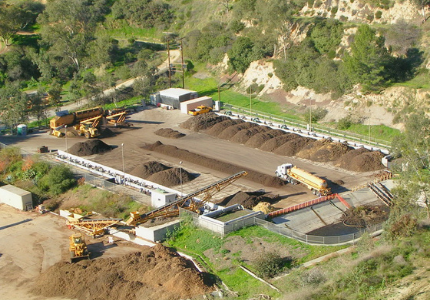
Starting in 2022, all jurisdictions will to need to provide organic waste collection services to all residents and businesses and recycle these organic materials using recycling facilities such as:

  • Anaerobic digestion facilities that create biofuel and electricity.
  • Composting facilities that make soil amendments

Learn Moreabout

0 #4

Procurement Requirements: Using Recycled Organics Products

As California collects and recycles organic materials, local governments will be required to use the products made from this recycled organic material, such as renewable energy, compost, and mulch.
Learn Moreabout

0 #5

Food Recovery

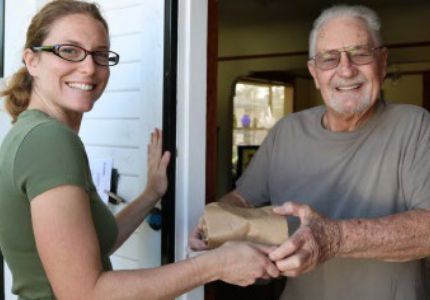
Starting in 2022, some food service businesses must donate edible food to food recovery organizations with others starting in 2024. This will help feed the almost 1 in 4 Californians without enough to eat.

California has a 2025 goal to redirect to people in need 20% of edible food currently thrown away.
Learn Moreabout

0 #6

Capacity Planning

SB 1383 requires counties to take the lead collaborating with the jurisdictions located within the county in planning for the necessary organic waste recycling and food recovery capacity needed to divert organic waste from landfills into recycling activities and food recovery organizations.

California has a 2025 goal to redirect to people in need 20% of edible food currently thrown away.
Learn Moreabout

0 #7

Enforcement

The enforcement provisions in SB 1383 will assist jurisdictions, non-local entities, local education districts, state, federal facilities, and CalRecycle to achieve the state’s climate goals and the 75 percent organic waste diversion goal by 2025 and into the future.

Learn Moreabout

0 #8

Recordkeeping Requirements

Regulated entities are required to maintain records that demonstrate how they are complying with the law. These records will assist regulated entities with preparing for compliance inspections required by local and state agencies.
Learn Moreabout

0 #9

Department Issued Waivers and Exemptions

If certain conditions are met, CalRecycle may issue waivers and exemptions to jurisdictions, local education agencies, and non-local entities that exempt them from some or all of these collection requirements.

Learn Moreabout

0 #10

Reporting

Jurisdictions are to report on program implementation. CalRecycle has developed Model Reporting Tools that jurisdictions can use to assist in meeting reporting

Learn Moreabout

0 #11

Complaints

CalRecycle has developed a recycling services and edible food collection complaints portal where the public can file complaints for lack of recycling services, improper labeling of bins, and other solid waste concerns.

Learn Moreabout

Resources for Implementation

0 #12

Jurisdictions

Requirements for city, county and special districts with solid waste collection.
Learn Moreabout

0 #13

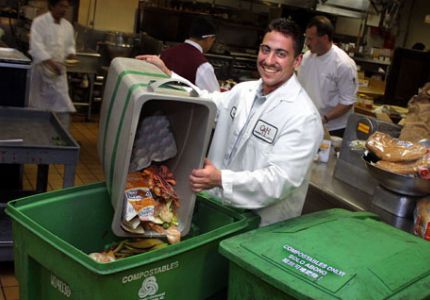
Education and Outreach Resources

CalRecycle offers resources to assist with education and outreach to jurisdictions, residents, and businesses.
Learn Moreabout

0 #14

Food Donors

Californians throw away 5-6 million tons of food waste every year. SB 1383 requires that businesses donate surplus food instead of throwing it out.

Learn Moreabout

0 #15

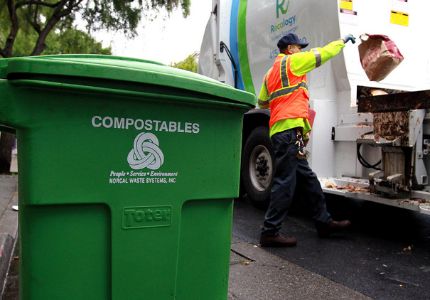
Food Recovery Organizations

SB 1383 links food service businesses with food recovery organizations to get donated food to Californians in need.
Learn Moreabout

0 #16

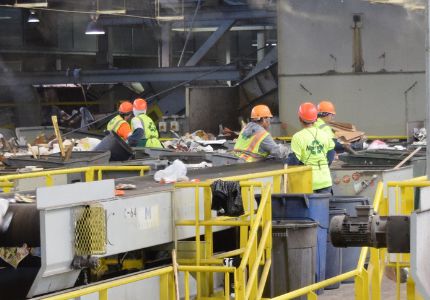
Waste Haulers

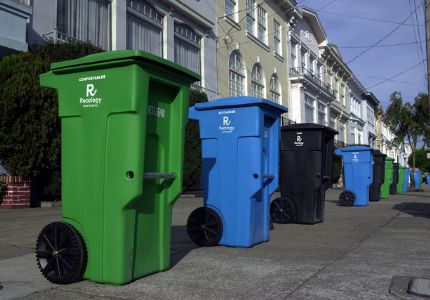
Each jurisdiction plans for and implements its own solid waste management programs, including organics recycling.  Each local program is based on state minimum standards, including collection service options, container color and labeling requirements, and contamination monitoring.  Hauler requirements at the local level vary depending on the type of hauler.
Learn Moreabout

0 #17

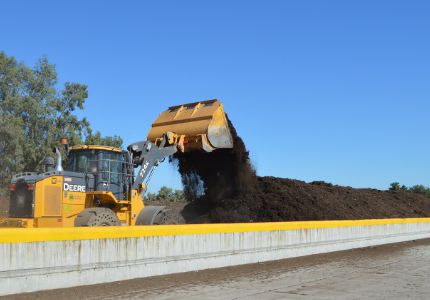
Transfer and Processing Facilities and Landfills

SB 1383 makes changes to Titles 14 and 27, adding requirements for transfer/processing facilities, operations for landfills and solid waste facility permitting.
Learn Moreabout

0 #18

Organics Recycling Facilities

SB 1383 requires organic waste facilities and operations to measure and report organic waste material activity, including composting and anaerobic digestion.

Learn Moreabout

0 #19

Local Enforcement Agencies

Local enforcement agencies (EAs) have the primary responsibility to enforce State solid waste facility regulations designed to protect public health and safety and the environment.
Learn Moreabout

0 #20

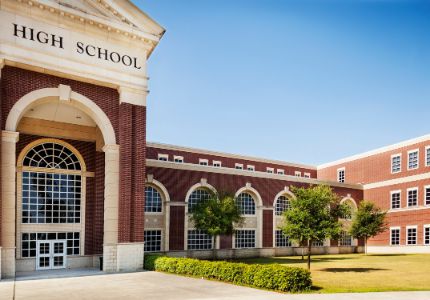
Local Education Agencies

SB 1383 regulations direct entities not subject to oversight by a jurisdiction to implement new organics recycling infrastructure, including, school districts, chapters, and county office of education.
Learn Moreabout

0 #21

Non-Local Entities

SB 1383 regulations direct entities not subject to oversight by a jurisdiction to implement new organics recycling infrastructure, including, state agencies, county fairgrounds, public universities including community colleges, facilities operated by state parks system, prisons, federal facilities, and special districts.

Learn Moreabout

0 #22

Elected Officials

Every department within a jurisdiction will be affected by the implementation of SB 1383 and will have a role to play. Staff in every department will need to understand how SB 1383 impacts their work, and implementation may require adding staff or contracting with other entities, such as environmental health inspectors or consultants.

Learn Moreabout

Related Resources

Reducing Short-Lived Climate Pollutants in California

The California Air Resources Board provides information on short-lived climate pollutants and the Proposed Revised Short-Lived Climate Pollutant Reduction Strategy.

General Plan Guidelines Update, Completed August 2, 2017

The California Governor’s Office of Planning and Research (OPR) completed the first comprehensive update to the General Plan Guidelines (GPG) since 2003. One of the major changes includes an expanded section addressing the need for additional recycling, anaerobic digestion, composting, and remanufacturing facilities in the land use element.

For more information contact: Organic Waste Methane Emissions Reductions, SLCP.organics@calrecycle.ca.gov

New Benicia Channel, ‘Jumping Into Solutions’

BenIndy highly recommends ‘Jumping Into Solutions’

Email from Pat Toth-Smith, February 10, 2023

Hi All, I’m so EXCITED to announce the start of a new YouTube and Spotify channel titled, “Jumping into Solutions” it was created by myself and a very skilled team of people (Kathy Kerridge, Bart Sullivan, June Mejias plus more).

We’ve had our first episode which features guest, Marie Knutson from Republic Services. It’s titled: What Can & Can’t be Composted? Exploring California’s New Composting Law SB1383 & More! (See below, or go to https://youtu.be/Q7PrASgvs2o .)

This episode clears up confusing things like: which bins do I put milk cartons, waxy take-out containers, paper coffee cups, or dog waste in? And it takes a deep dive into the new expanded compost law SB1383. Please check it out and let us know what you think!

ALSO FROM PAT:
A great video from the State about how this law (SB1383) reduces methane to help combat climate change. The goal is to remove 75% out of the landfills by 2025. Methane is a more potent greenhouse gas than carbon dioxide. https://m.youtube.com/watch?v=7ZoiQVyIW3M
You can also check out the audio version on Spotify – listen in your car or at bedtime! https://open.spotify.com/show/3utt9ARsPtlTvKbS35ru3V

The purpose of this channel is to explore climate solutions in meaningful ways, that can empower people to make changes in their lives to help our ailing planet.

Please help support our channel and watch the video/podcast, and if you like it… promote it, share it to your friends and family, and post & comment on it your social media feeds! Thank you for any help in getting this off the ground.

Pat Toth-Smith
Benicia

What to Know About the Risks of Gas Stoves and Appliances

After learning her gas stove was leaking methane, one reporter consulted public health experts to learn about the scope of the problem and what people can do to reduce these risks at home.
Illustration by Laila Milevski, special to ProPublica

ProPublica, by Lisa Song, January 23, 2023

Lisa Song, ProPublica

As a climate reporter, I was well aware of the growing concern about the gas stoves in people’s homes leaking dangerous pollutants, like methane, a potent greenhouse gas and explosive hazard; nitrogen dioxide, which worsens asthma; and benzene, which causes cancer. But I was a renter who had no control over my appliances. So I mostly ignored it — until one day last fall when I smelled the rotten-egg odor of leaking natural gas while baking focaccia.

I borrowed a $30 gas leak detector from a friend (a fellow climate reporter, of course). When I turned on the oven in my New York City apartment, the lights for a “significant” leak lit up. My kitchen was filling up with methane. According to the user manual, that meant I should “VENTILATE THE AREA IMMEDIATELY and move to a safe location” in case of an explosion. I opened the windows and ignored the evacuation advice (don’t follow my example), too intent on taking a video of the leak as proof for my landlord before turning off the oven. Then I vented my frustration by panic-texting friends and eating too much focaccia — after cutting it into pieces and baking it in my toaster oven. Luckily, my landlord replaced my faulty stove within days. I made sure to check the new stove (still gas, alas) for leaks after it was installed.

“People still don’t recognize that there are health downsides to cooking with gas in your home,” said Regina LaRocque, a Harvard Medical School professor who does research on medicine and public health. “This is the 21st century, and we have better ways of cooking than over a fire.”

The issue has caught national attention in recent weeks, as the U.S. Consumer Product Safety Commission considers regulating gas stoves. Public health experts and environmentalists have long warned of the risks of gas ranges. One study found that indoor gas stoves were responsible for roughly 13% of childhood asthma cases in the U.S. The American Public Health Association and American Medical Association have urged consumers to transition away from gas.

LaRocque uses a traditional electric coil stove at home. But she and other experts advocated for induction stoves, which use electromagnets to heat up food. These stoves are growing in popularity as consumers choose them for climate, health and safety reasons, though they can cost more than twice as much as a gas range.

The federal Inflation Reduction Act will provide rebates to upgrade to electric or induction home appliances (here’s a Wirecutter guide on that program). Some states, including Massachusetts, offer their own rebates as well.

Induction stoves are much more common in Europe, LaRocque said. That cultural shift has yet to occur in the United States, where more than a third of households use gas stoves. As Mother Jones reported, the gas industry embraced the term “cooking with gas” in the 1930s; an executive even made sure to get it worked into Bob Hope’s comedy routines. More recently, the industry has opposed electrification efforts with lobbying and social media influencers who tout gas as a “super cool way” to cook.

I consulted multiple experts on the hazards of gas stoves and what people can do about them. Their advice boiled down to this: homeowners who can afford it should switch to an induction or electric stove. For renters and others who can’t replace their appliances, the experts provided tips on lowering the health risks.

What Are the Risks of Gas Appliances?

Credit:Illustration by Laila Milevski, special to ProPublica

Methane is a greenhouse gas. The gas that’s piped into your house is virtually all methane. When you burn methane to cook food, it turns into carbon dioxide. But unburned methane trickles out from loose fittings and faulty stovetop igniters. Every pound of methane released into the air is 30 to 86 times more effective at warming the planet than a pound of carbon dioxide.

When researchers analyzed 53 homes in California last year, they found methane leaking from almost every stove. More than three-quarters of that methane came from stoves that were turned off. The act of igniting a burner or oven released additional puffs of methane. If these leaks are consistent across the nation, then annual methane emissions from U.S. gas stoves would equal the greenhouse gas emissions of half a million cars.

These leaks are “pretty much universal,” said Robert Jackson, a Stanford University professor and a study co-author. Jackson, who’s spent more than a decade studying methane leaks from gas wells, pipelines and other fossil fuel infrastructure, said it can be hard to predict where the leak is coming from. Based on the description of the leak in my kitchen, he told me it likely was caused by ignition problems with the oven. Jackson’s research has inspired him to ditch his gas stove, furnace and hot water heater in favor of induction and electric appliances.

“I did not expect to see the high levels of indoor air pollution we saw consistently,” he said. “It strongly motivated me to replace my own stove.”

Large methane leaks can cause explosions. If you smell gas in your home, leave the building and call your gas company. The distinctive rotten-egg odor comes from chemicals that gas companies add to the methane to make it easier to detect, since the gas is naturally odorless.

Some people are much more sensitive to the smell than others, so it’s not a foolproof warning for explosive risk. Eric Lebel, lead author of the methane study Jackson worked on, recalled smelling gas in some of the homes where he did the testing, even though the homeowners couldn’t smell anything. Lebel is a senior scientist at PSE Healthy Energy, a nonprofit science and policy research institute.

Burning natural gas releases nitrogen dioxide, a respiratory irritant. Nitrogen dioxide exacerbates asthma and impairs lung function. The Environmental Protection Agency regulates these emissions from cars and power plants with national air quality standards, but those regulations don’t apply to indoor air.

The Lebel and Jackson study measured nitrogen dioxide and a related compound. They found steadily rising emissions after turning on burners and ovens.

“Simply having a combustion stove in your home is a health risk,” LaRocque said. In poorly ventilated kitchens, nitrogen dioxide levels could exceed outdoor air standards. “It would be like standing behind an idling car, or standing in a smoke-filled room,” she added. “I think if my child had asthma, I would definitely want to intervene.”

Gas stoves leak benzene, a carcinogen that can cause leukemia. In a separate study published last fall, Lebel and his colleagues analyzed gas samples from residential kitchens. Out of 160 samples, all but one contained benzene.

“If there’s a leak from that appliance, it likely contains benzene,” Lebel said. “It’s a rather unavoidable cost of owning a gas appliance.”

Raw natural gas contains a mix of methane and toxic chemicals like benzene, toluene or formaldehyde. Gas companies strip out the impurities before piping the processed gas to homes, but they don’t eliminate all the toxins.

Lebel’s team modeled the benzene concentrations from the leaking stoves and found a handful that failed to meet California’s benzene safety guidelines. They also found traces of other harmful compounds, including toluene, ethyl benzene and xylene, which can cause dizziness, nausea and liver damage. A separate study of gas appliances in the Greater Boston area found benzene in 95% of samples, though at lower levels than Lebel’s study.

How Can I Protect Myself?

Credit: Illustration by Laila Milevski, special to ProPublica

Turn on the range hood above your stove. Paul Francisco, associate director of building science at the University of Illinois Urbana, Champaign, suggests cooking on the back burners and using the hood whenever you turn on the stove or the oven. The fans improve ventilation and will pull benzene, methane and nitrogen dioxide outdoors.

However, this only works if the hood connects to the outside of your house. Follow the piping on the hood: If the top of the device goes through the ceiling or the wall, then it should help with air quality.

Another type of range hood, called a “ductless” hood, simply recirculates indoor air. If your hood has grilles or vents on the front, then it’s likely, but not guaranteed, to be ductless, Francisco said. These fans won’t cut down on harmful gases, but they might be able to reduce particulate matter — tiny particles created during cooking, which can cause or exacerbate respiratory illness. A 2014 study found that cooking on induction stoves produced far fewer particles than cooking on gas or electric stoves.

Open a window to improve ventilation. At a minimum, an open window will dilute toxic gases.

If your kitchen is in the upper half of a building, opening the window should draw the contaminants outside as long as there’s no wind and it’s warmer inside than outside, Francisco said. If you live in the lower half of a building, opening a window in the winter won’t be as effective, he said, though any ventilation is better than none.

Get an induction hot plate. If you can’t replace your stove, experts said the next best thing is to buy an induction burner. Here are some consumer guides with reviews of portable hot plates.

During last summer’s heat waves, when I couldn’t fathom lighting a fire inside my kitchen, I did almost all my cooking using an induction hot plate, an Instant Pot and an electric toaster oven. Excessive heat is another reason why some chefs advocate for induction burners.

What about air purifiers? These devices have become more popular as a way to improve air quality and reduce the risk of COVID-19 infections. Most air purifiers won’t have any effect on toxic gases, though they do remove particulate matter, Francisco said. Some specialty models filter out volatile organic compounds, a class of chemicals that includes benzene.

Should I buy a gas detector? There are a number of methane monitors that are designed for consumers, priced from roughly $30 to $200. Some will tell you about the presence of a leak. Others are sensitive enough to detect specific concentrations of methane. You can also find indoor monitors that detect particulate matter for $200 to $300.

It’s much harder to monitor for benzene or nitrogen dioxide. The types of instruments used by Lebel and Jackson cost tens of thousands of dollars and require users to undergo extensive training.

The South Coast Air Quality Management District, a regulatory agency in California, maintains a list of “low-cost” air quality sensors (less than $2,000) that can be used by citizen scientists and advocacy groups. These sensors can be used to detect particulate matter, nitrogen dioxide and volatile organic compounds.

Lebel said it shouldn’t be up to individuals to solve a systemic issue. It seems problematic, he said, “to be asking citizens to be scientists and try and discover if their stove is leaking.”

Ohio catastrophe is ‘wake-up call’ to dangers of deadly train derailments

The next derailment ‘could be cataclysmic’ if action isn’t taken after the incident near the Ohio-Pennsylvania border, says expert

An aerial view of the train derailment several days after the incident, on 8 February, in East Palestine, Ohio. Photograph: MediaPunch/Rex/Shutterstock

The Guardian, by Tom Perkins, 11 Feb 2023

Five days after a train carrying vinyl chloride derailed and exploded near the Ohio-Pennsylvania border, crews ignited a controlled burn of toxic chemicals to prevent a much more dangerous explosion.

Thousands in East Palestine, a town of about 5,000 people, evacuated, and officials warned the controlled burn would create a phosgene and hydrogen chloride plume across the region. Phosgene is a highly toxic gas that can cause vomiting and breathing trouble, and was used as a weapon in the first world war.

Though no one died in the accident, the catastrophe serves as a wake-up call to the potential for more deadly freight rail derailments, public health advocates warn. By one estimate, 25 million Americans live in an oil train blast zone, and had the derailment occurred just a few miles east, it would be burning in downtown Pittsburgh, with tens of thousands of residents in immediate danger.

Ineffective oversight and a largely self-monitoring industry that has cut the nation’s rail workforce to the bone in recent years as it puts record profits over safety is responsible for the wreck, said Ron Kaminkow, an Amtrak locomotive engineer and former Norfolk Southern freight engineer.

“The Palestine wreck is the tip of the iceberg and a red flag,” said Kaminkow, who is secretary for the Railroad Workers United, a non-profit labor group that coordinates with the nation’s rail unions. “If something is not done, then it’s going to get worse, and the next derailment could be cataclysmic.”

About 4.5m tons of toxic chemicals are shipped by rail each year and an average of 12,000 rail cars carrying hazardous materials pass through cities and towns each day, according to the US Department of Transportation.

The latest accident comes after 47 people were killed in the town of Lac-Megantic, Quebec, in 2013 when a runaway train exploded. In February 2020, a crude oil train derailed and exploded outside Guernsey, Saskatchewan, and an ethanol train in Kentucky derailed and burst into flames a week later.

The Pittsburgh region alone has seen eight train derailments over the last five years, according to the public health advocacy group Rail Pollution Protection Pittsburgh (RPPP), and about 1,700 annually occur nationally. The causes of the Pittsburgh accidents highlight the myriad ways in which things can go wrong. A crack in a track ignored by rail companies caused a 2018 derailment, while another train hit a dump truck at a crossing with inadequate safety equipment. A broken axle on a train car is thought to be the source of the East Palestine accident.

Up to 50% of volatile Bakken crude oil refined on the east coast currently runs through metro Pittsburgh, RPPP estimated, and about 176,000 Pittsburghers live in the derailment blast zone.

Rail traffic is projected to increase through the region as a new Shell plastic plant comes online and rail infrastructure, like tracks and bridges, are in a precarious state, said Glenn Olcrest, founder of RPPP.

“The railroads are playing Russian roulette with Pittsburgh,” he said. “We are a prime candidate for a major derailment and explosion.”

Still, the US transportation department (DoT) in 2020 approved a rule to allow liquified natural gas, or LNG, to be shipped via rail with no additional safety regulations. Trains can now run 100 or more tank cars filled with 30,000 gallons of the substance, largely from shale fields to saltwater ports.

The decision was opposed by local leaders, unions, fire departments and the NTSB.

“The risks of catastrophic LNG releases in accidents is too great not to have operational controls in place before large blocks of tank cars and unit trains proliferate,” the NTSB wrote in a comment on the proposed rule.

Just 22 train tank cars filled with LNG hold the same amount of energy as the Hiroshima bomb, a coalition of environmental groups wrote in comments to regulators opposing the LNG rail rule change in 2020. That is raising fears of a catastrophe if a proposed LNG port is built in New Jersey, which could take shipments from two 100-car trains daily that would run through nearby metro Philadelphia.

An LNG fire is extremely difficult for local crews to contain, and shipping it via rail is “an extremely dangerous practice”, said Natural Resources Defense Council senior attorney Kimberly Ong.

“We’ve been astonished by the effect that the spillage of five cars of vinyl chloride has had at the Pennsylvania-Ohio border, but that would be nothing compared to the effects of a similar derailment of LNG,” she added.

In Florida, plans to expand passenger rail service also seem designed to increase LNG shipment capacity by the company behind the effort, said Susan Mehiel, coordinator of the Alliance for Safer Trains. The public safety advocacy group fears higher-speed passenger trains sharing tracks with freight trains carrying LNG and other chemicals could ignite a disaster like that in East Palestine.

Eastern Ohio is less dense than most of where Florida’s lines run, Mehiel added. An LNG explosion in denser east Florida would likely be much more deadly, she said.

“There’s no evacuation because you’re dead, so it’s very frightening,” Mehiel said.

Under the Biden administration, the transportation department has proposed a suspension of the Trump-era LNG rule allowing the substance to be transported via rail and to replace it with a new rule. The suspension was supposed to be published by June 2022, but it and the new rule have been delayed twice, and are now supposed to be final in March, Ong said.

“I don’t know if this is a priority for DoT,” she added.

The Railroad Workers United pinned the threat on rail industry cuts to inspection staff and the elimination of safety protocol. The East Palestine train was hurried, the non-profit said in a statement, and though a cause hasn’t been fully determined, it appears the train was not properly inspected.

Rail companies laid off more than 20,000 rail workers during a year period in 2018-2019, representing the biggest layoffs in rail since the Great Recession, and the nation’s rail force has dipped below 200,000 – the lowest level ever, and down from 1 million at its peak.

“They have cut the hell out of the workforce, and there are big plans to cut it further,” Kaminkow said. “Just because the rail companies are profitable doesn’t mean they’re healthy.”