
All posts by Roger Straw

Editor, owner, publisher of The Benicia Independent

KQED: Valero’s pollution monitoring data: “Questionable until further notice”

Repost from KQED The California Report
[Editor: UPDATE AS OF APRIL 12, 2019: According to sources, the refinery’s partial shutdown will continue for maybe another month. Valero reports that they will not be back online until sometime between early and mid May.  – R.S.]

Valero’s March Pollution Release Exposes Weaknesses in Benicia’s Air Monitoring System

By Ted Goldberg, Apr 10, 2019
A plume containing petroleum coke dusts wafts from a smokestack at Valero’s Benicia oil refinery on March 23. (Sasha Khokha/KQED)

When a major malfunction caused Valero’s Benicia refinery to spew out pollution last month, leading city officials to warn residents with respiratory issues to stay indoors, the agency that regulates air in the Bay Area had to send a van to monitor the situation.

That’s because there is no stationary air monitoring device in Benicia’s residential areas, even though the city is home to one of the largest refineries in California.

The Bay Area Air Quality Management District took a series of air samples, but none during the height of the emergency that Sunday morning of March 24, when a plume of black smoke filled the air for hours, convincing officials to issue a health advisory.

Several people called 911 to report breathing problems at the time of the refinery breakdown. The air district said it received about a dozen complaints.

There’s also no evidence that Valero monitored the air in those residential areas during the time period when the releases were most extreme.

The refinery problems sent soot into the air and followed two weeks of more minor releases that regulators thought were tapering off. The plume that morning eventually led Valero to shut down a large part of its facility, a move that has contributed to the increase in the cost of gas statewide in recent weeks.

Several public agencies and companies conducted air monitoring work to measure for a variety of chemicals that may have spewed from the refinery’s stacks.

Some local officials say those tests may prove that, for the most part, elevated levels of particulate matter and toxic gases did not waft into nearby residential neighborhoods.

Indeed, it looks so far like the pollution was not as bad as the extreme release of toxic sulfur dioxide that accompanied Valero’s May 2017 power outage, one of the Bay Area’s worst refinery accidents in years.

But Benicia’s mayor, along with a leading air quality expert and two local environmentalists, say these most recent releases confirm that the small North Bay city needs a more robust and coordinated strategy to measure what gushes out of its largest employer.

“It seems that right now, if there’s an incident, what happens is folks kind of drive around and see if they can catch the plume,” said Anthony Wexler, director of the Air Quality Research Center at UC Davis.

Valero’s data:”Questionable until further notice”

Three government agencies are investigating the most recent malfunction at the Valero refinery. The focus of at least one of those investigations centers on two key components at the refinery that experienced problems, allowing petroleum coke, an oil processing residue, to escape.

The refinery malfunctions began on March 11. Two days later, Valero hired an Arkansas-based consulting firm, the Center for Toxicology and Environmental Health (CTEH), to take air samples around the refinery to test for carbon monoxide, nitrogen oxide, sulfur dioxide and particulate matter.

During eight consecutive days of testing, the firm detected more than a thousand small readings for particulate matter less than 10 microns wide and 2.5 microns wide, known as PM 10 and PM 2.5, respectively.

That work ended when regulators and Valero believed the releases were coming to an end. On March 23, petroleum coke began again belching from the refinery’s stacks.

But the CTEH did not restart air sampling until the following afternoon, well after the health advisory had ended and officials told the public the air was OK.

Hollin Kretzmann, an attorney with the Oakland-based Center for Biological Diversity, said it’s concerning that the CTEH data does not include the time period during the height of the releases.

“There is a huge gap of data that we are missing,” Kretzmann said.

A CTEH spokesman referred questions to Valero, which declined to answer questions about the firm’s work.

Valero runs fence line monitors around the refinery, but the site that publishes its data includes a warning that all of its measurements should be considered “questionable until further notice” because several of its parts require adjustments before they can produce reliable and accurate data.

Air district monitoring efforts

On March 24 and 25, BAAQMD inspectors drove the agency’s mobile monitoring van near the refinery to measure for hydrogen sulfide, sulfur dioxide and carbon monoxide, as well as benzene, toluene and butadiene.

The agency compared those concentrations for acute, chronic and work-time exposure to state health standards, according to Eric Stevenson, the district’s director of meteorology and measurements

“What we saw in these results was nothing above those levels,” Stevenson said. “That being said, we did them on Sunday after a lot of the worst visual impacts were detected.”

Stevenson said the district did not collect air monitoring data when the health advisory was in effect in order to protect the health of its staff and because county officials did not request it.

“When the health department declares a shelter in place, we do our best to provide any information that they request. They didn’t request any information from us prior to that shelter in place,” Stevenson said.

Solano County spokesman Matthew Davis confirmed that the county did not request tests from the air district before it issued the health advisory.

‘”All of the air readings up to that point, during and afterwards, were ‘good’ to ‘moderate’ and at no time did the county or CTEH results show ‘unhealthy’ levels for sensitive individuals or the general public,” Davis said.

Elevated particulate levels  

However, an air monitoring log from the Benicia Fire Department shows six occurrences when particulate readings were elevated in the early morning hours before the advisory. Fire crews did not take any samples during the hours-long health advisory.

“The fire department’s monitoring shows particulate matter pollution repeatedly spiked to very high levels, far higher than what would be considered safe for daily air quality,” Kretzmann said. “It raises big concerns for vulnerable people, like kids with asthma.”

The fire department’s log also includes several instances in which crews noted moderate to strong petroleum byproduct odors.

“This is concerning since those could be toxic,” said Wexler, the UC Davis air quality expert.

By the time Solano County inspectors restarted tests that morning, at 9:45 a.m., the particulate levels had dropped.

The county also tested areas in the refinery on one day to determine whether high levels of heavy metals were in the petroleum coke dust coming from the stacks.

Those tests revealed that the releases did not include elevated levels of heavy metals, according to Jag Sahota, the county’s environmental health manager.

Calls for change

“You can’t fix what you don’t know,” Benicia Mayor Elizabeth Patterson said in an interview on Monday.

Patterson said the city needs a stronger air monitoring program, money to run it and expertise to understand it, similar to the one in Richmond, where Chevron’s refinery is located. A program there provides air quality readings from monitors in three neighborhoods.

“It’s not helpful if you don’t know the full extent of the public impact,” said Patterson. “If you don’t have the personnel and you don’t have the funds and you don’t have a clear path of information, you don’t know what’s going on. You can’t take measures to protect public health and safety.”

Wexler agrees.

“We really need to surround the plant with monitors in the neighborhoods where people are living and breathing,” he said. “If the facility can’t get control of its situation, it should incur some costs to protect the people who live in the region.”

Andres Soto, a Benicia resident and organizer for Communities for a Better Environment, said the city has gone too long without an efficient and robust air monitoring program.

“We need to have a very comprehensive monitoring system that is looking at both the greenhouse gases as well as the particulate matter,” Soto said. “We needed to do that 10 years ago. It’s beyond critical.”

Kretzmann, from the Center for Biological Diversity, said the refinery and air district do not have a plan in place to capture the most critical data when pollution threatens Benicia residents.

“There’s no telling what information we’re missing, and the community still doesn’t know the true extent of danger it’s facing,” he said. “The city needs a system that can accurately and comprehensively measure air pollution when dangerous events occur.”

More monitoring on the horizon

The air district said it’s planning to add monitoring stations to areas near all five of the Bay Area’s refineries.

“These stations will be sited to help evaluate and track refinery emission impacts in the surrounding communities,” said air district spokesman Ralph Borrmann, adding that the agency is “identifying and attempting to secure suitable space for the site in Benicia.”

Valero also plans to help fund work on community monitoring devices, as part of a 2003 settlement with a local environmental group. That group, called the Good Neighbor Steering Committee, is planning to hire staff to run a community air monitoring device in the city’s northwest corner.

That might ease the community’s concern but not lead to the best data, said Dr. Bela Matyas, Solano County’s health officer.

“More monitors would clearly give more refined information,” Matyas said. “But in places where that’s been done, that does not yield more accurate estimates of risk over the long term over that area.”

During major incidents, like Valero’s recent malfunction, he added, mobile air monitoring is still necessary to capture data that a stationary device would not be able to collect.
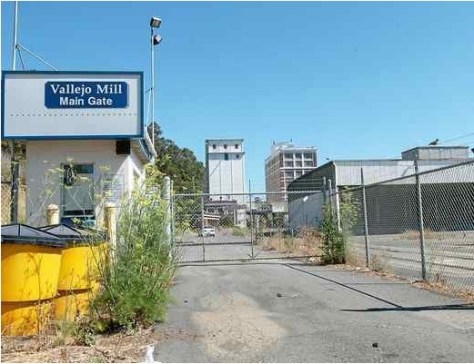
Vallejo declares VMT/Orcem appeal abandoned

[Editor –  More:   View the Attorney General’s scathing 13-page letter.  For opponents’ perspective, see Fresh Air Vallejo.  For official project documents, see Vallejo’s City website.   – R.S.]

City looking to set special hearing

Vallejo Times-Herald, By John Glidden, April 10, 2019 at 6:33 pm

Apparently, tired of waiting to receive cooperation from Vallejo Marine Terminal (VMT), City Hall sent official notice on Wednesday informing representatives with VMT and Orcem Americas that city staff determined the project application has been abandoned.

Staff wrote that the lack of information and collaboration from VMT is preventing City Hall from finalizing the project’s final environmental impact report (FEIR) and presenting it before the City Council for certification under the California Environmental Quality Act (CEQA).

“As you know this is required for the VMT/Orcem Project. Without clarity or cooperation from VMT, the City has now determined that the VMT/Orcem Project application has been abandoned,” wrote Snannon Eckmeyer, assistant city attorney. “City staff intends to recommend denial of the appeal.”

Release of the city’s letter comes just a day after all three sides failed to meet as previously scheduled. Krista Kim, the attorney representing VMT principals Alan Varela and William Gilmartin, informed city staff and Orcem via an email sent out at 2:20 a.m. Tuesday morning that a calendar error would cause her to skip Tuesday’s meeting.

“I was going to attend on VMT’s behalf but I just got back from vacation this morning and realized my flight to DC is actually Tuesday morning at 6 a.m., rather than Wednesday at 6 a.m. as I had on my calendar,” Kim wrote in an email shared with the Times-Herald.  “Thus, I am actually heading to the airport in an hour or so and regret having to send this late cancellation.”

That, in turn, caused Orcem Americas President Steve Bryan to cancel his Tuesday morning flight from Houston to Sacramento.

“I assumed the meeting had been cancelled and I cancelled my flight and returned home,” Bryan wrote in an email to City Manager Greg Nyhoff after receiving Kim’s message.

City Hall wasn’t amused, re-iterating VMT continually failed to provide information about its control of the South Vallejo land both businesses hope to build on. In addition, city staff said they have sought Varela’s and Gilmartin’s signatures on an indemnification and assignment and assumption agreement, which staff say is needed to continue the appeal.

“Without clarity from VMT on if it wants to proceed with the application appeal process, the City cannot determine if several of the mitigation measures we have discussed are feasible,” staff wrote. “We have not received the barge implementation strategy and fleet management plan data from VMT, which is also necessary for certain mitigation measures. Neither VMT nor Orcem signed the reimbursement agreement necessary to complete the environmental justice analysis and to release the associated funding.”

All three sides met on March 26 to discuss the various topics, including VMT’s claim that city leaders are confused over the metes and bound descriptions regarding the city ground lease between Vallejo and VMT, and another section of land, Parcel 1, which VMT says it owns in fee.

According to the same city letter, both sides agreed to meet again in April to allow VMT time to gather the appropriate documents.

“At that (March 26) meeting, the VMT applicants requested we meet in person on April 9, 2019, to which you all agreed. The purpose of the delay was to allow all of you time to gather documents to support your position and bring resolution about how to move forward,” the letter reads.

However, Tuesday’s meeting never took place, due to Kim’s “error.” Attempts to reach Kim were unsuccessful on Wednesday.

Reached by email on Wednesday, Bryan said Tuesday’s meeting can be rescheduled.

“The more critical issue is that the City Attorney has now hired outside counsel to challenge VMT as to whether they even own the General Mills property,” Bryan wrote. “Seven years into the process the City suddenly does not accept that VMT owns the property project is on. The resolution of that issue has to be everyone’s urgent priority, before anything else.”

City Hall also released the unfinished draft version of the updated FEIR on March 26, stating that without the needed information from the VMT, the document is incomplete.

“The city has acted reasonably in all its attempts to get the parties to finalize outstanding issues. We have attempted to communicate with you on numerous occasions to try to get you to finalize the joint-applicant appeal,” staff wrote in a letter sent to VMT and Orcem on Wednesday. “We have received minimal communication from any of you on any of our requests.”

Vallejo Marine Terminal (VMT) wants to build a deep-water terminal, while Orcem Americas is seeking to build a cement facility. Both projects would be located on the same 31 acres at 790 and 800 Derr St. next to the Mare Island Strait in South Vallejo.

The Vallejo Planning Commission voted 6-1 in 2017 to reject the VMT/Orcem project, agreeing with City Hall that the project would have a negative effect on the neighborhood, that it would impact traffic around the area and the proposed project was inconsistent with the city’s waterfront development policy. The project also has a degrading visual appearance of the waterfront, City Hall said at the time.

City officials argued in 2017 that since a rejection was being recommended, a FEIR was not required. At the time, city leaders called the first iteration of the document a draft FEIR.

Orcem and VMT appealed the Planning Commission decision, and in June 2017 when reviewing the appeal, a majority of the then-council directed City Hall to complete the impact report.

Since then, numerous agencies have issued letters of concern with the project as they reviewed the first version of the DFEIR.

‘Are You Serious?’ John Kerry Interrupts GOP Climate Denial Logic in Disbelief

Repost from DESMOG

By Justin Mikulka • Wednesday, April 10, 2019 – 13:27

John Kerry

Congressional discussions over climate change have reached such a low point that during this week’s House hearing on the national security risks of climate change, former Secretary of State John Kerry, who was testifying, broke down and just asked his Republican questioner, “Are you serious?”

Kerry’s incredulous question was in response to Republican Rep. Thomas Massie, the GOP star of the House Committee on Oversight and Reform hearing, which also featured testimony from former Secretary of Defense Chuck Hagel. Kerry’s and Hagel’s testimonies were followed by several hours of, at times, excrutiating questioning from committee members.

Republicans made a big show of the fact that Massie has an engineering degree from the Massachusetts Institute of Technology. The conflict with Kerry arose when Massie tried to undermine Kerry’s testimony on climate change because he has a political science degree from Yale.

Massie said, “I think it’s somewhat appropriate that somebody with a pseudoscience degree is here pushing pseudoscience in front of our committee today.”

If science degrees are important to Massie, he must have somehow missed the thousands of climate scientists around the world who have studiedpublishedtweetedmarched, and repeated that climate change is real, caused by humans, and having major impacts now.

During this hearing, Massie wasn’t alone in displaying bizarre logic to attack science and the reality of climate change. Rep. Paul Gosar (R-AZ) apparently thought holding up a fossil disproved that humans are causing climate change.

Climate change has been changing all through the life of this planet. I’ve got a fossil right here from Western Wyoming — a desert — but that once was under an ocean,” he said.

That was the sum total of his argument.

Not to be outdone, Rep. Greg Steube (R-FL) took issue with Kerry’s statement about global warming making existing weather events more extreme by noting: “I remember growing up and having hurricanes in Florida.”

It all led to Secretary Kerry at one point expressing his frustration to committee chairman Elijah Cummings (D-MD), saying, “Mr. Chairman, this is just not a serious conversation.”

And it was not when Republicans were part of it. However, when Hagel and Kerry both spoke, they made clear the point that climate change is a real national security threat and requires action. Meanwhile, the Republicans on the committee indicated they intend to do nothing but continue a long history of delay and denial on climate change.

Hagel and Kerry Agree: Climate Change Threatens National Security

Hagel and Kerry spent their time delivering a sober analysis of the risks climate change poses to national security — a position which they repeatedly stressed during the hearing. “Climate change is already affecting national security,” said Kerry.

Kerry also noted in his opening statement that this has been the position of every federal administration for the last 28 years. He pointed to the first Bush administration, which said in 1992, that climate change was “already contributing to political conflict.”

We don’t need to wait for more sophisticated climate models to project the security consequences of climate change,” Hagel said in his opening statement. “The impacts of climate change are clearly evident today.”

Both Hagel and Kerry spoke extensively about the current and future threats posed by a changing climate and had plenty of examples to make the case.

Among the many threats, Hagel discussed rising sea levels, extreme weather, and the lack of military readiness. Kerry raised the issues of climate migration, global pandemics, water scarcity, and extreme weather’s current contribution to radicalism, which he said would continue to create instability that would be “manna from heaven for extremists.”

Perhaps the best single example of how climate change is impacting security in the U.S. can be found at Norfolk Naval Base in Virginia. This base — the largest American military base — already is dealing with flooding and sea level rise. At one point in the hearing, former defense secretary Hagel mentioned the need to potentially relocate the base in the future due to sea level rise.

And yet when Republicans in the hearing had a chance to respond to this rather alarming fact, they spent that time mostly ridiculing the idea that any of this should even be discussed.

Gas Is a ‘Bridge Fuel,’ Secretary Kerry?

John Kerry was a strong advocate for dealing with climate change throughout the hearing and acknowledged the significant strides freshman Rep. Alexandria Ocasio-Cortez, who sits on the House Committee on Oversight and Reform, has already taken to advance the issue in her short congressional tenure.

However, Kerry also proceeded to repeatedly champion a supposed climate change solution espoused by the fossil fuel industry and did so using industry talking points, referring to natural gas as a “bridge fuel” to climate-friendly energy sources.

While saying that natural gas would be “a component of our energy mix for some time to come,” Kerry justified this position with a flawed argument for gas.

Gas gives us a 50 percent gain over the other fossil fuels in the reduction of emissions, so it’s a step forward,” he said.

Kerry’s take, which compares how “clean” natural gas is compared to other fossil fuels, is true when simply comparing carbon dioxide emissions from coal-fired power to the newest gas power plants. However, that limited comparison excludes the ways natural gas production, and its potent methane contributions, are adding to climate change.

The concept of natural gas as a “bridge fuel” to renewable sources has been debunked repeatedly. And as methane flaring, leaking, and venting in the fracked oil and gas supply chain continue to increase rapidly, the climate impacts of fracked gas can be similar or worse than other fossil fuels.

Kerry and Hagel adeptly explained the serious national security threats posed by climate change. However, calling natural gas part of a long-term solution to preventing catastrophic climate change isn’t a serious conversation either.

Main image: Former Secretary of State John Kerry addressing congress. Credit: Screenshot from Congressional testimony. 

Tar Sands Crude Shipments Quietly Increased In Oregon, With Regulators In the Dark

Repost from Oregon Public Broadcasting

Tar Sands Crude Shipments Quietly Increased In Oregon, With Regulators In the Dark

By Tony Schick, April 4, 2019 4:48 p.m. | Portland, Ore.

If oil is moving through Oregon, it’s Michael Zollitsch’s job to know about it. He oversees the state’s emergency responses to oil spills and other environmental disasters.

But last March, when Bloomberg News reported oil from Canada’s tar sands was rolling through Zenith Energy’s storage facility in Northwest Portland on its way to Asia, it caught him by surprise.

“News to me!!” he wrote to his staff at Oregon’s Department of Environmental Quality, and to Richard Franklin, a regional spill coordinator for the U.S. Environmental Protection Agency.

“Me, too!” Franklin wrote back.

It wasn’t the first time oil spill regulators were in the dark about oil shipments through Oregon, and it wouldn’t be the last.

Documents obtained by OPB under Oregon’s public records law show regulators struggled for months to get straight answers about what kind of oil was moving on trains — dubbed “rolling pipelines” by their critics — through Portland and when.

Tank cars on the train tracks outside of the Zenith Energy oil terminal in Portland also contain a placard warning of toxic inhalation.
Tank cars on the train tracks outside of the Zenith Energy oil terminal in Portland also contain a placard warning of toxic inhalation. Tony Schick/OPB

State officials resorted to tracking ships along the Columbia River and guessing how much oil they might be loading based on the amount of ballast water on board — a far cry from the 24-hour notice Washington facilities send regulators for all oil-by-rail shipments.

When DEQ did learn the chemical makeup of that oil, according to the documents, they discovered a potential risk of toxic inhalation for workers and neighbors of the facility: The oil contains enough hydrogen sulfide that the safety data sheets for the product call for spill responders to wear not just masks but fully supplied air, similar to a scuba tank.

Megan Mastal, a public relations representative for Zenith, which operates 24 facilities in the U.S. and internationally, said in an emailed statement that the company has been up front with regulators and that the oil it handles does not pose any additional hazards.

“Our customers trust us with safe and efficient storage of their critical product,” Mastal said. “Zenith provides services to some of the largest companies in the world and has passed their vigorous inspection and vetting requirements. We are proud of our employees and their dedication to our safety-first culture.”

Oregon Lags

For six years oil trains have been rolling through Oregon — including one in 2016 that derailed and exploded in the Columbia River Gorge. And yet, the government workers charged with preventing and cleaning up oil spills in Oregon remain as in the dark as ever about many of these shipments. That’s largely because of successful industry lobbying efforts and the reluctance of Oregon’s legislature to pass rules already enacted in neighboring states.

While lawmakers have passed bans on offshore oil drilling and fracking — both unlikely prospects in Oregon — they have done relatively little to regulate the real and present danger that oil could spill from trains rumbling through the state.

For the fourth session in a row, the Oregon Legislature is now considering new rules for oil trains. House Bill 2209 would require DEQ oversight of railroad oil spill planning and assesses fees on railroads to help pay for the state’s work.

Already this session, lawmakers have introduced two bills that would match the stronger requirements in Washington — and let them die without so much as a public hearing. Now, with the session in its 12th week, lawmakers are advancing a less restrictive proposal, House Bill 2209, which was developed in collaboration with Union Pacific Railroad and BNSF Railway, among others.

This comes as oil-by-rail shipments out of Canada’s oil sands have been on the rise. Existing businesses in Oregon have quietly shifted operations to handle more of it, even as plans for brand new fossil fuel projects have been rejected up and down the Northwest.

With the loosest rules on the West Coast, environmentalists fear Oregon has become the path of least resistance for an oil that sinks in water and, they say, could devastate iconic fisheries and waterways.

On the Columbia River, a company known as Global Partners LP successfully changed its port lease to allow for heavy crude at its Clatskanie, Oregon, facility. That facility was originally built as a bio-refinery in 2009 with $36 million in green energy loans and tax tax credits from the state.

And on the Willamette River, an oil terminal owned by Zenith Energy in Northwest Portland is under construction to nearly quadruple railcar loading capacity at what used to be an asphalt plant.

“This is really troubling, to see that Oregon’s environmental laws aren’t standing up to oil trains in the way most people would expect. Particularly in the wake of the Mosier oil train disaster. It’s really alarming,” said Dan Serres, conservation director for the Columbia Riverkeeper.

DEQ’s attempts to regulate the Zenith terminal show how ill-informed and ill-prepared the state’s oil spill responders can be under the state’s current regulations for oil by rail.

Regulators In The Dark

At various points throughout 2018, Zenith’s terminal manager informed DEQ that the company was switching away from Canadian crude to a lighter oil, and that it was moving away from crude entirely, according to agency emails.

The company also switched its planned oil spill drill to prepare for diesel instead of tar sands crude — an entirely different type of response.

“He claims that over the next 3 years the facility will primarily be handling diesel and he does not expect any more shipments of the heavy crude oil for some time,” Scott Smith, who regulates the Zenith facility for DEQ, wrote in an email to colleagues.

That didn’t happen.

Zenith continued to handle heavy crude from Canada. Its current construction indicates it is increasing that business.

In an emailed statement, Mastal said Zenith never told DEQ it was shifting operations away from crude oil, only that it was switching the type of crude oil. She also said a large part of the company’s Portland business plan is now attracting renewable fuels.

“There appears to be a misunderstanding of industry terminology as it relates to various grades and types of oil,” Mastal said in the statement.

Records show it took Smith weeks to obtain the chemical data sheets telling him exactly what the terminal was handling, something he usually gets before a new product is being shipped.

“One of the most important things we look at it is, ‘What is the oil or chemical that spilled and its physical and chemical properties?’” Smith later told OPB. “They determine how we respond.”

Those sheets contained another surprise: There’s hydrogen sulfide in the dilbit crude, as the industry refers to diluted bitumen crude from the tar sands.

“I was alarmed to see that the Tar Sands they are working with now require full face air supplied respirators or SCBA’s [self-contained breathing apparatuses],” Smith wrote in an email obtained by OPB. He told fellow regulators at DEQ and the Department of Labor that the tar sands oils had other properties that call for extra precaution.

According to DEQ, the risk of toxic inhalation from hydrogen sulfide significantly reduces the number of potential responders in the event of a spill, because not all of them or trained or equipped for it. That also limits the speed of response, if people need to be evacuated and work in shifts because of limited air supply.

Depending on weather, spilled oil containing hydrogen sulfide could pose an air quality risk to neighbors, according to DEQ.

“Zenith disagrees with the implication there are additional hazards brought on by Dilbit Crude,” wrote Mastal, the Zenith public relations representative in her emailed response to questions.

Mastal said the concentrations of hydrogen sulfide in the crude handled on site are below federal exposure limits for workers. She said the company has emergency equipment and procedures in place, and that Zenith has extensive experience handling heavy crude, including drills in four of the past five years.

After questions from DEQ, the company hired an industrial hygienist to assess the risks from the crude oil it is stores. Zenith has since updated its official spill response plan to account for toxic inhalation risks.