From Occupational Health & Safety OHSonline
[Editor: Most significant: “The U.S. Department of Transportation’s Pipeline and Hazardous Materials Safety Administration recently released a web-accessible Transportation Rail Incident Preparedness and Response training resource.” – RS
How Industrial Hygienists Assist in Rail Emergencies
Speaking at an AIHce 2016 session, several experts said industrial hygienists are well suited to anticipate, recognize, and respond to the hazards and to control the risks using science-based methods.
By Jerry Laws, Jul 01, 2016
 Industrial hygienists are well prepared to perform an important role during the response to a railroad hazardous materials emergency, several experienced experts said during an AIHce 2016 session about rail crude oil spills on May 24. Risk assessment, data analysis, and plan preparation (such as the health and safety plan, respiratory protection plan, and air monitoring plan) are important early in the response to such emergency incidents, and CIHs are equipped to do all of these, they stressed.
“With our knowledge, skills, and abilities, the training and education that industrial hygienists get, we’re well prepared” to interpret data on the scope and nature of a hazmat spill following a derailment, said Billy Bullock, CIH, CSP, FAIHA, director of industrial hygiene with CSX Transportation. He mentioned several new roles the industrial hygienist can manage in such a situation: health and safety plan preparation, town hall meetings to inform the public, preparing news releases for area news media, interpreting data from air monitoring, working with the local health department, and serving as the liaison with area hospitals, which can improve their treatment of patients affected by the spill if they understand where exposures really are happening and where a gas plume from the spilled crude is moving, he said.
Bullock said the industrial hygienist’s role is primarily in evaluating chemical exposures:
- assessing the risk for inhalation hazards
- supporting operational decisions
- gathering valid scientific information
- managing data and ensuring data quality reporting and recordkeeping
“All of these things we do as part of our day job transfer to an emergency situation very, very well,” he said, explaining that it’s very important to gain the trust of local responders and officials, including fire department leaders, hazardous materials response teams, the health department, and city officials.
Another speaker, Laura Weems, CIH, CSP, CHMM, with the U.S. Army Corps of Engineers in Little Rock, Ark., agreed, saying industrial hygienists are well suited to anticipate, recognize, and respond to hazards and to control risks using science-based methods.
Cleanup Workers Face Inhalation, Fire, and Heat Stress Hazards
Scott Skelton, MS, CIH, senior industrial hygienist for CTEH, the Center for Toxicology and Environmental Health, LLC, and other speakers explained that the hazard assessment following a hazmat derailment begins by identifying the type of crude oil that has spilled. It’s critical to know its flammability and the status of the oil’s containment, he said, and if there is an active fire, officials in command of the response will have to decide whether cleanup personnel are wearing flame-resistant clothing or chemical-protective apparel and will default to protecting against the greater hazard, he explained.
Benzene exposure—a dermal and inhalation hazard—is a concern in the early hours of a crude oil spill following the derailment, Skelton said. He discussed a 2015 test spill into a tank measuring 100 feet by 65 feet, where the benzene was completely lost and other lighter compounds also were lost 24 hours after the spill occurred. But that type of large surface area for a crude oil spill is not typical at actual derailments, he said. Still, he said the inhalation risk for cleanup workers is of most concern during the initial 24 hours of a spill.
“It’s my opinion that heat stress is the most dangerous aspect,” Skelton said. “With these [cleanup] guys, heat stress risk is extraordinary.” The American Petroleum Institute (API)’s report on PPE use by workers involved in the cleanup of the Deepwater Horizon oil spill confirmed this, he added.
Patrick Brady, CIH, CSP, general director of hazardous materials safety for BNSF Railway Company, pointed out that crude oil spills from derailments are rare: 99.998 percent of the 1.7 million hazardous materials shipments moved by the railroad during 2015 were completed without an accidental release, he said.
Brady said the railroad pre-positions 253 first responders along with needed cleanup equipment at 60 locations along its rail network. “The best case planning for us is we don’t rely on any local resources to be there at all,” he said, so BNSF hires hazmat contractors for crude oil derailment response and brings in consultants from CTEH to interpret monitoring data. (Responding to a question from someone in the session’s audience, he touted the AskRail™ app, a tool that gives emergency responders information about the hazardous materials inside a railcar or the contents being transported on an entire train. http://www.askrail.us/)
Dyron Hamlin, MS, PE, a chemical engineer with GHD, said hydrogen sulfide is the primary acute hazard faced by responders after a spill occurs. While an H2S concentration below 50 ppm is irritating, 50-100 ppm causes loss of the individual’s sense of smell, and 100 ppm is immediately dangerous to life and health. If the crude oil in a railcar has 1 percent sulfur in the liquid, GHD personnel typically measure 300 ppm of H2S in the headspace inside the railcar, Hamlin said.
Echoing Skelton’s comments, Hamlin said API found that 50 percent of the mass of typical crude oils is lost in the first 48 hours following a spill; following the Deepwater Horizon spill, the volatile organic compounds measured in the air during the response were lower than expected because of water dissolution in the Gulf of Mexico, he said.
He cautioned the audience members to keep in mind that all hazardous material railcars’ contents are mixtures, which complicates the task of calculating boiling points and other factors important to responders and cleanup workers.
DOT Helps Out PHMSA Offers Rail Incident Training Resource
The U.S. Department of Transportation’s Pipeline and Hazardous Materials Safety Administration recently released a web-accessible Transportation Rail Incident Preparedness and Response training resource, saying it gives emergency responders critical information and best practices related to rail incidents involving Hazard Class 3 Flammable Liquids, such as crude oil and ethanol. It is off-the-shelf training that is available online and can be used anywhere throughout the country.
“TRIPR is the result of a concerted effort between federal agencies and rail safety stakeholders to improve emergency response organizations’ ability to prepare for and respond to rail incidents involving a release of flammable liquids like crude oil or ethanol,” said PHMSA Administrator Marie Therese Dominguez. “We are committed to safety and providing responders with flexible, cost-effective training and resources that help them respond to hazmat incidents safely.” The resource was developed in conjunction with other public safety agencies, such as the Federal Emergency Management Agency, the U.S. Coast Guard, and EPA, in order to prepare first responders to safely manage incidents involving flammable liquids.
“Some of the most important actions we have taken during the last two years to increase the safety of transporting crude oil by rail have been providing more resources, better information, and quality training for first responders. This web-based training is another tool to help first responders in communities large and small, urban and rural, quickly and effectively respond if a derailment happens,” said FRA Administrator Sarah E. Feinberg.
The TRIPR curriculum focuses on key hazmat response functions and incorporates three animated training scenarios and introductory videos to help instructors facilitate tabletop discussions. PHMSA announced that it plans to host a series of open houses nationwide to promote the curriculum. Visit http://dothazmat.vividlms.com/tools.asp to download the TRIPR materials.
About the Author: Jerry Laws is Editor of Occupational Health & Safety magazine, which is owned by 1105 Media Inc.


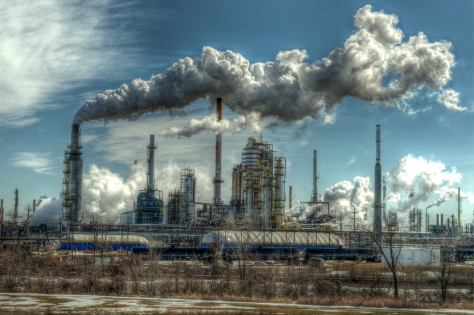
 Bay Area air regulators are looking into several recent malfunctions at Chevron’s Richmond refinery, Valero’s Benicia facility and the Phillips 66 plant in Rodeo that led each facility to send flares into the sky.