Category Archives: Solano County CA

SF Chronicle report on contact tracing in Bay Area – “Solano County did not respond”

Bay Area’s contact tracers struggle amid coronavirus surge

San Francisco Chronicle, by Carolyn Said, July 20, 2020
In a photo taken with a telephoto lens, beachgoers gather at Robert W. Crown Memorial Beach on Tuesday, May 26, 2020, in Alameda, Calif. Most people maintained at least fifteen feet between groups.
In a photo taken with a telephoto lens, beachgoers gather at Robert W. Crown Memorial Beach on Tuesday, May 26, 2020, in Alameda, Calif.  Most people maintained at least fifteen feet between groups. Photo: Noah Berger / Special to The Chronicle

Contact tracing — finding and notifying everyone who has had close contact with a person infected with the coronavirus — is key to stemming the pandemic. Once people learn they’ve spent time near someone who had the virus, they can get tested themselves and quarantine so they don’t infect others.

Bay Area county health departments ramped up in April and May to handle the laborious process, most of it armchair detective work by phone and email, not the high-tech surveillance some in Silicon Valley originally envisioned. But the recent surge in cases has made the task much harder, because there are more people to contact and because it takes longer to be tested and then get the results.

Alameda, Contra Costa, Marin, San Francisco, San Mateo and Santa Clara counties all fall short of their goal of doing case investigations for 90% of the people who test positive, and then reaching out to 90% of the folks those people had close contact with while they were infectious.

Napa, Sonoma and  Solano  counties did not respond to requests for information.

When it comes to reaching contacts of the people who tested positive, the counties range from 70% to 80%, except for Contra Costa, which reaches only 26% of those who had contact with infected people, and Marin, which reached only 46% (its numbers are older). Still, those numbers are far better than those in New York and some other states.

“Obviously we want as many as possible because that’s where you get the most bang for your buck,” said Dr. George Rutherford, an infectious diseases expert at UCSF who spearheaded San Francisco’s contact-tracing program. But modeling shows that even reaching 43% of infected people’s contacts provides some disease suppression. “I think the spread would be worse without” contact tracing, even though it hasn’t reached its potential, he said.

Contra Costa County could not say why it is so far below the Bay Area norm, especially since it is closer than Alameda and San Mateo counties to meeting its contact tracing staff goal.

“We’ve been grappling with it,” said Erika Jenssen, deputy director of Contra Costa Health Services. “To do effective contact tracing, we need timely lab results for tests, adequate staffing and to partner with the community.”

She pointed to delayed test results as a major obstacle. While the median turnaround time in the county is four days, many results come in as late as 10 days after testing — by which time a person may not longer be infectious.

And it’s not just results that take a while: In parts of the Bay Area, some people must wait a week or more for a testing slot to open up.

The case investigations — interviews with newly diagnosed people — shed light on how the virus has spread since shelter-in-place orders were eased.

“We are seeing more people who were at some kind of gathering; that’s a common source of exposure,” Jenssen said. Contra Costa County investigators found that 18% of those who tested positive had attended large gatherings in the previous 15 days, while 17% had been to in-person workplaces. About 20% had visited restaurants, supermarkets and other stores.

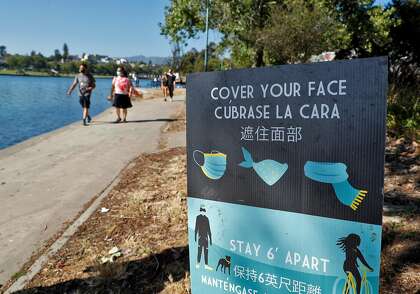
Signs encourage wearing a mask at Lake Merritt in Oakland in June.
Signs encourage wearing a mask at Lake Merritt in Oakland in June. Photo: Carlos Avila Gonzalez / The Chronicle
Even counties that have maintained fairly high contact tracing numbers say they struggle with the surge.

Solano coronavirus test positivity rate climbs over 9%, County reports 71 new cases today


Friday, July 17: 71 new cases today, no new deaths.  Since the outbreak started: 2,554 cases, 31 deaths.

Compare previous report, Thursday July 15:Summary

  • Solano County reported 71 new cases today, total of 2,554 cases since the outbreak started.  Over the last 7 days, Solano reported 479 new cases, an average of 68 per day.
  • No new deaths today, total of 31.
  • Hospitalizations4 fewer currently hospitalized persons today, total of 51.  The County reports an increase of 3 in the total number hospitalized since the outbreak started, 127.  Not sure how to reconcile current and total hospitalization numbers….  (The County no longer reports Total Hospitalized plainly, but I have added the numbers in the Age Group chart.)
  • Active cases Solano reported 47 fewer ACTIVE cases today, total of 393.  The number of Active Cases has been climbing steadily in July, increasing from 307 active cases to yesterday’s record high of 440.  Note that only 51 of these 393 active cases are hospitalized; a lot of infected people are out among us, hopefully quarantined.  One wonders… is the County equipped to contact trace so many infected persons?
  • ICU beds Available remained steady at 39%.  Ventilators Available also remained steady at 90%.
  • Testing 798 residents were tested since yesterday, total of 41,498.  But we still have a long way to go: only 9% of Solano County’s 447,643 residents (2019) have been tested.

Percent Positive Test Rate

Solano County reported today’s 7-day percent positive test rate at 9.1%Over this first week of reporting positive test data, Solano’s rate has increased each day: 5.3% on Monday, then 6.7%, 7.3%, 8.4%, and finishing out the week today at 9.1%.  This is definitely not a good trend.  In addition to daily figures, the dashboard shows a line graph charting the positive test rate over time. The dramatic daily increases this week will begin to show on the 7-day average line sometime next week.  CONTEXT: Increasingly, health officials and news reports are focusing on percent positive test rates.  Most Bay Area counties report daily on their seven-day average percent positive test rate, but Solano County did not until Monday.  This information is immediately important, as test positivity is one of the best metrics for measuring the spread of the virus.  Positive test rates in California and other southwestern states have been on the rise.  California’s positivity rate today is reported at 7.1%.

By Age Group

  • Youth 17 and under – 6 new cases today, total of 243 cases, and no new hospitalizations, total only 2 since the outbreak beganA week ago, there were only 202 cases among this age group – we’ve seen 41 new cases in just 7 days!  I continue to raise an alarm for Solano’s youth.  Cases among Solano youth have increased in recent weeks to 9.5% of the 2,554 total confirmed cases.
  • Persons 18-49 years of age – 45 new cases today, total of 1,548 cases.  This age group represents over 60% of the 2,554 total cases, by far the highest percentage of all age groups.  The County reported 1 new hospitalization and no new deaths among this age group today, total of 33 hospitalized since the outbreak began, and 2 deaths.
  • Persons 50-64 years of age – 15 new cases today, total of 494 cases.  This age group represents over 19% of the 2,554 total cases2 new hospitalizations today, total of 41 hospitalized since the outbreak began.  No new deaths, total of 3 deaths.
  • Persons 65 years or older – 5 new cases today, total of 268 cases.  This age group represents 10.5% of the 2,554 total cases. No new hospitalizations, total of 51 hospitalized since the outbreak began.  No new deaths, total of 26 deaths.  In this older age group, just under 19% of cases required hospitalization at one time, a substantially higher percentage than in the lower age groups This group accounts for 26 of the 31 deaths, or 84%.

Incidence Rate: Cases, Hospitalizations, Deaths

On the Race/Ethnicity chart and the Age Group chart there are “Rate” tabs.  Today’s report shows:

  • Solano County has 568 positive cases per population of 100,000, up from 552 yesterday and 462 last Friday (Compare this number with the City incidence rates, below.)
  • 28 Solano hospitalizations per population of 100,000, about the same as yesterday.
  • 7 Solano deaths per population of 100,000, unchanged since yesterday.

City Data

  • Benicia added 3 new cases today, total of 55 cases.  Benicia was extremely stable with only 2 new cases for the entire month of June.  Now Benicia has seen 15 new cases in 7 days.
  • Dixon added 2 new cases today, total of 135 cases.
  • Fairfield added 28 new cases today, total of 881.  Fairfield has more positive cases than anywhere in Solano County.
  • Rio Vista added 0 new cases today, total of 23 cases.
  • Suisun City added 8 new cases today, total of 193 cases.
  • Vacaville added 10 new cases today, total of 420 cases.
  • Vallejo added 20 new cases today, total of 839.
  • Unincorporated areas – Although the County still still shows Unincorporated at <10 (less than 10), a little math tells the story: Solano’s unincorporated areas remained steady at 8 cases, those unaccounted for in the other City totals.

Race / Ethnicity

The County report on race / ethnicity data includes case numbers, hospitalizations, deaths and Solano population statistics.  There are also tabs showing a calculated rate per 100,000 by race/ethnicity for each of these boxes.  This information is discouragingly similar to national reports that indicate worse outcomes among black and brown Americans.  As of today:

  • White Americans are 39% of the population in Solano County, but only account for 22% of cases, 23% of hospitalizations and 21% of deaths.
  • Black Americans are 14% of Solano’s population, and account for 12% of cases, but 27% of hospitalizations, and 32% of deaths.
  • Latinx Americans are 26% of Solano’s population, but account for 34% of cases, 28% of hospitalizations, and 25% of deaths.
  • Asian Americans are 14% of Solano’s population, and account for 9% of cases and 14% of hospitalizations, but 18% of deaths.

Much more…

The County’s new and improved Coronavirus Dashboard is full of much more information, too extensive to cover here on a daily basis.  The Benicia Independent will continue to summarize daily and highlight a report or two.  Check out the Dashboard at https://doitgis.maps.arcgis.com/apps/MapSeries/index.html?appid=055f81e9fe154da5860257e3f2489d67.

Solano COVID-19 numbers up again, increase in hospitalizations and positive test rates


Thursday, July 16: 76 new cases today, no new deaths.  Since the outbreak started: 2,483 cases, 31 deaths.

Compare previous report, Wednesday July 15:Summary

  • Solano County reported 76 new cases today, total of 2,483 cases since the outbreak started.  Over the last 7 days, Solano reported 498 new cases, an average of 71 per day.
  • No new deaths today, total of 31.
  • HospitalizationsSolano is reporting a rather alarming upward trend, including  9 more currently hospitalized persons today, total of 55.  Oddly, the County reports an increase of only 1 in the total number hospitalized since the outbreak started, 124.  Not sure how this can be accurate….  (The County no longer reports Total Hospitalized plainly, but you can add the numbers in the Age Group chart.)
  • Active cases Solano reported 54 new ACTIVE cases today, total of 440.  The number of Active Cases has been climbing steadily in July, increasing from 307 active cases to today’s record high of 440.  Note that only 55 of these 440 active cases are hospitalized; a lot of infected people are out among us, hopefully quarantined.  One wonders… is the County equipped to contact trace so many infected persons?
  • ICU beds Available remained steady at 39%.  Ventilators Available also remained steady at 90%.
  • Testing 304 residents were tested since yesterday, total of 40,700.  But we still have a long way to go: only 9% of Solano County’s 447,643 residents (2019) have been tested.

Percent Positive Test Rate

Solano County reported today’s 7-day percent positive test rate at 8.4%, up from 7.3% yesterday, 6.7% Tuesday, and 5.3% on Monday.  For some reason, these numbers do not agree with the County’s daily figures on the chart.  In addition to daily figures, the dashboard shows a line graph charting the positive test rate over time. The dramatic daily increases this week will begin to show on the 7-day average line sometime next week.  CONTEXT: Increasingly, health officials and news reports are focusing on percent positive test rates.  Most Bay Area counties report daily on their seven-day average percent positive test rate, but Solano County did not until Monday.  This information is immediately important, as test positivity is one of the best metrics for measuring the spread of the virus.  Positive test rates in California and other southwestern states have been on the rise.  Johns Hopkins: California’s positivity rate today is reported at 7.3% (down by 0.2% from yesterday).

By Age Group

  • Youth 17 and under – 4 new cases today, total of 237 cases, and no new hospitalizations, total only 2 since the outbreak beganTwo weeks ago, there were only 132 cases among this age group – we’ve seen over 100 new cases in just 14 days!  I continue to raise an alarm for Solano’s youth.  Cases among Solano youth have increased in recent weeks to 9.6% of the 2,483 total confirmed cases.
  • Persons 18-49 years of age – 53 new cases today, total of 1503 cases.  This age group represents over 60% of the 2,483 total cases, by far the highest percentage of all age groups.  The County reported no new hospitalizations and no new deaths among this age group today, total of 32 hospitalized since the outbreak began, and 2 deaths.
  • Persons 50-64 years of age – 11 new cases today, total of 479 cases.  This age group represents over 19% of the 2,483 total cases1 new hospitalization today, total of 39 hospitalized since the outbreak began.  No new deaths, total of 3 deaths.
  • Persons 65 years or older – 8 new cases today, total of 263 cases.  This age group represents 10.6% of the 2,483 total cases. No new hospitalizations, total of 51 hospitalized since the outbreak began.  No new deaths, total of 26 deaths.  In this older age group, just under 20% of cases required hospitalization at one time, a substantially higher percentage than in the lower age groups This group accounts for 26 of the 31 deaths, or 84%.

Incidence Rate: Cases, Hospitalizations, Deaths

On the Race/Ethnicity chart and the Age Group chart there are “Rate” tabs.  Today’s report shows:

    • Solano County has 552 positive cases per population of 100,000, up from 536 yesterday and 462 last Friday (Compare this number with the City incidence rates, below.)
    • 28 Solano hospitalizations per population of 100,000, about the same as yesterday.
    • 7 Solano deaths per population of 100,000, unchanged since yesterday.

City Data

  • Benicia added 2 new cases today, total of 52 cases.  Benicia was extremely stable with only 2 new cases for the entire month of June.  Now Benicia has seen 23 new cases in 14 days.  The numbers are small in comparison to other Solano cities, but something’s definitely going on in Benicia!
  • Dixon added 1 new case today, total of 133 cases.
  • Fairfield added 22 new cases today, total of 853.  Fairfield has more positive cases than anywhere in Solano County.
  • Rio Vista added 0 new cases today, total of 23 cases.
  • Suisun City added 6 new cases today, total of 185 cases.
  • Vacaville added 24 new cases today, total of 410 cases.
  • Vallejo added 21 new cases today, total of 819.
  • Unincorporated areas – Although the County still still shows Unincorporated at <10 (less than 10), a little math tells the story: Solano’s unincorporated areas remained steady at 8 cases, those unaccounted for in the other City totals.

Race / Ethnicity

The County report on race / ethnicity data includes case numbers, hospitalizations, deaths and Solano population statistics.  There are also tabs showing a calculated rate per 100,000 by race/ethnicity for each of these boxes.  This information is discouragingly similar to national reports that indicate worse outcomes among black and brown Americans.  As of today:

  • White Americans are 39% of the population in Solano County, but only account for 22% of cases, 22% of hospitalizations and 21% of deaths.
  • Black Americans are 13% of Solano’s population, and account for 12% of cases, but 27% of hospitalizations, and 32% of deaths.
  • Latinx Americans are 26% of Solano’s population, but account for 35% of cases, 30% of hospitalizations, and 25% of deaths.
  • Asian Americans are 14% of Solano’s population, and account for 9% of cases and 14% of hospitalizations, but 18% of deaths.

Much more…

The County’s new and improved Coronavirus Dashboard is full of much more information, too extensive to cover here on a daily basis.  The Benicia Independent will continue to summarize daily and highlight a report or two.  Check out the Dashboard at https://doitgis.maps.arcgis.com/apps/MapSeries/index.html?appid=055f81e9fe154da5860257e3f2489d67.

Solano COVID test rate 2nd highest in Bay Area

[BenIndy editor: The Chronicle’s 7-day test rate numbers match the daily 7-day average numbers recently released by Solano County through July 12.  More recent numbers are available: Solano first released test numbers to the public on July 13, at 5.3%, increasing on July 14 to 6.7% and on July 15 to 7.3%.  The Benicia Independent and others repeatedly requested Solano Public Health to release positive test rate information, and it took weeks for the County to finally add the 7-day average to its daily dashboard report.  – R.S.]

Charts show how coronavirus positive test rates have roller-coastered in Bay Area counties

San Francisco Chronicle, by Kellie Hwang, July 16, 2020 

As California reverses course this week and shutters many reopened businesses in the counties on its coronavirus watch list, one crucial metric guiding health officials’ decisions is the positive test rate.

That figure, which officials refer to as the “positivity rate,” is the percentage of tests conducted that come back positive for coronavirus. The state threshold for counties to reopen faster is 8% over a seven-day period. California’s current positive test rate sits at 7.1%, and the latest 7-day moving average for the U.S. is 8.7%.

Lee Riley, an infectious disease expert at UC Berkeley, said the positive test rate is one of several ways to assess the trajectory of the epidemic, along with hospitalizations and deaths.

“The public should care because if any of these parameters are increasing, they need to know why,” he said. “They need to know who is not wearing masks and what social gathering settings are contributing to the increased spread. Then, these behaviors can be targeted for correction.”

But what does the positive test rate look like across different regions of the Bay Area, where seven counties — Alameda, Contra Costa, Marin, Napa, Santa Clara, Solano and Sonoma — are on the watch list?

We examined what the average positive test rate was over the past two weeks for each county, and compared that to the historical trendline to see how things have changed over time. For a number of counties, the changes are quite stark.

Top of the list: Marin, Solano, Contra Costa

Marin County tops the list right now with an average rate of 12.9%, the third highest in the state over the past 14 days as of Tuesday afternoon. That number includes the outbreak at San Quentin State Prison, which now has more than 1,300 active cases. The prison had zero coronavirus cases through May until the transfer of prisoners from Chino to Marin County on May 30, which led to the rapid spread.

Marin County doesn’t include the prison statistics in its reporting, and instead listed a 14-day average positive test rate of 7.1% as of July 10. But the state and The Chronicle’s Coronavirus Tracker include the San Quentin cases, which are putting a strain on local hospitals and contributing to community spread, since prison workers have also become infected.

Both of those numbers are considerably higher than what Marin was averaging at the end of May, about 3.7%, before the outbreak at the prison. And the county’s rate was just 2% in early May. Marin County has seen outbreaks in skilled nursing facilities, growing cases among essential workers and within the county’s Latino population.

Solano County currently has the next highest positive test rate in the Bay Area, at 6.3% for the 14-day period. The state points to outbreaks among farmworkers who live in Solano County but work at Napa and Sonoma vineyards. Like many other places that are reopening, county officials have tied many cases to more in-person gatherings among individuals who don’t live in the same household.

Contra Costa County is third highest at 5.1% over the past 14 days. The state reports a rise in hospitalizations paralleling the increasing infections. The 7-day average was last reported at 7.8% on July 12, and in May, it never went higher than 3.8%. The county recently implemented a stricter face mask order requiring individuals dining on restaurant patios to keep face coverings on at all times except when actively eating or drinking.

Posting the lowest rates: San Francisco, Santa Clara

San Francisco has the lowest positive test rate of any Bay Area county at 2.1% for the 14-day period. The lowest average rate it has posted on a weekly basis was 1.1% in mid-June, and the highest was 4.3% in early May.

San Francisco has been cautious about reopening, waiting until June 12 to allow outdoor dining and indoor retail. Further expansions planned for late June and early July, including hair salons and indoor dining, have been postponed indefinitely.

“San Francisco was the first county to implement the lockdowns, so it had low rates to begin with,” Riley said. “I think they’ve been able to maintain these low rates also because people have accepted social distancing practices seriously.”

Santa Clara County is the second lowest at 2.5% for the past 14 days. While Santa Clara’s positive rate has remained well below the state threshold and the average rate hasn’t peaked above 3.3%, the county has seen an increase in hospitalizations, which prompted the state to place it on the watch list.

“Many of the cases identified in Santa Clara County are from long-term care facilities, who are more likely to develop severe disease requiring hospitalization,” Riley said. “The overall number of cases is not very high, but the proportion of people developing severe disease may be higher in this county than some of the other counties.”

The county reported its biggest daily case count of the pandemic, 258, on July 8. Essential businesses in food service and construction have recently been tied to outbreaks in the county.

In the middle: San Mateo, Napa, Alameda, Sonoma

San Mateo County’s positive test rate is 3.3% for the 14-day period ending Tuesday. The county has progressed far into reopening, with less risky businesses resuming in May, indoor dining OKd in mid-June, and most other businesses allowed to open by June 19. It was the only Bay Area county still allowing indoor dining as of Monday, when Gov. Gavin Newsom’s statewide order revoked that privilege; others either suspended operations earlier or hadn’t allowed them to reopen yet.

Napa County, with a 3.7% positive test rate over the 14-day period, was the earliest Bay Area county to reopen outdoor and indoor dining, on May 20. For most of June, Napa’s weekly positive test rate was steady at 1.7%, and in late May it was as low as 0.4%. But the state reports social gatherings, an increase in transmission, especially among the Latino community, and the impact on agricultural workers contributed to a recent rise in the rate, which reached 4.7% on July 5.

Alameda County, at 4% for the 14-day period, has been among the slowest in the Bay Area to reopen. But increased social interactions and a spike in cases among essential workers and in nursing facilities prompted the state to place it on the watch list on Wednesday. The county had allowed outdoor dining to resume on June 19, but had to reverse course last weekend because of a state restriction. As of Wednesday, restaurants can reopen for patio dining again. Alameda posted its lowest weekly rate in mid-June at 3.6%. Throughout May it hovered around 5%.

Sonoma County follows with a 4.2% positive test rate over the 14-day period, and saw its highest daily case count since the start of the pandemic on July 12, when 116 infections were reported. Health officials have blamed the rise on more social gatherings, and workplace outbreaks including at skilled nursing facilities. Outbreaks have also occurred among workers at wineries. Past positive test rates are not recorded on the county website, so we were unable to chart the historical trend.

Here is the complete list of positive test rates for all 58 California counties over the 14-day period ending at 4 p.m. Tuesday:

Stanislaus: 15.2
Merced: 14.9
Marin (includes San Quentin cases): 12.9
San Joaquin: 12.6
Imperial: 12.3
Tulare 12.1
Orange: 12
Glenn: 11.8
Fresno: 11.6
Colusa: 11.5
San Bernardino: 11.2
Riverside: 10.8
San Diego: 10.2
Madera: 9.6
Kings: 8.9
Monterey: 8.7
Santa Barbara : 8.4
Sutter: 8.4
Yuba: 8.4
San Benito: 6.8
Kern: 6.7
Los Angeles: 6.5
Sacramento: 6.4
 Solano: 6.3  Yolo: 6.3
Contra Costa: 5.1
Placer: 4.9
San Luis Obispo: 4.8
Ventura: 4.3
Butte: 4.2
Sonoma: 4.2
Alameda: 4
Napa: 3.7
Calaveras: 3.6
San Mateo: 3.3
Santa Cruz: 3.2
El Dorado: 3.1
Del Norte: 2.9
Lake: 2.7
Tehama: 2.6
Amador: 2.5
Santa Clara: 2.5
Mono: 2.3
Shasta: 2.2
San Francisco: 2.1
Plumas: 2
Nevada: 1.9
Humboldt: 1.7
Lassen : 1.6
Siskiyou: 1.4
Inyo: 1.1
Mariposa: 0.9
Tuolomne: 0.8
Mendocino: 0.6
Alpine: 0
Modoc: 0
Sierra: 0
Trinity: 0

Kellie Hwang is a San Francisco Chronicle staff writer.